Yala National Park isn't just Sri Lanka's most famous wildlife reserve—it's home to the world's highest density of leopards. Imagine a golden-spotted cat lounging on a sun-baked rock, flicking its tail lazily as your jeep idles 20 meters away. That's the Yala dream, and while leopard sightings aren't guaranteed (these are wild animals, after all), the park delivers an unforgettable safari experience whether you spot the big cat or not.
Beyond leopards, Yala's 979 square kilometers of scrubland, lagoons, and dense jungle teem with elephants, sloth bears, crocodiles, and over 200 bird species. This guide covers everything you need to know for a Yala safari in 2026: the best times to visit, realistic costs in LKR and USD, booking tips, what wildlife to expect, and how to maximize your chances of that magical leopard encounter. Let's dive in.
The leopard capital of the world. Yala boasts the highest leopard density globally, particularly in Block 1 where you'll find roughly one leopard per square kilometer. While sightings depend on luck and timing, your chances here beat anywhere else on the planet.
Incredible biodiversity beyond leopards. Even if you don't see a leopard, Yala won't disappoint. Herds of elephants roaming near lagoons, sloth bears foraging for termites, massive crocodiles basking in the sun, and vibrant birdlife (including peacocks, eagles, and painted storks) make every safari thrilling.
Dramatic landscapes. Yala's terrain shifts from thorny scrubland to dense jungle, serene lagoons, and dramatic coastal rock formations. The scenery alone—especially at golden hour—justifies the entrance fee.
Accessible from popular routes. Yala sits conveniently between the beach towns of Mirissa and Arugam Bay, making it easy to slot into your Sri Lanka itinerary. Most travelers combine it with the south coast or hill country adventures like Ella.
Yala's wildlife roster reads like a dream safari checklist. Here's what you might encounter, along with realistic expectations:
The star attraction. Yala's leopards are less shy than their counterparts elsewhere, occasionally strolling across roads or lounging on rocks in broad daylight. Block 1 has the highest concentration, with around 35-40 individuals.
Sighting chances: During dry season morning safaris, roughly 60-70% of visitors spot a leopard. Wet season drops this to 30-40%. Some people see multiple leopards; others leave empty-handed after three safaris. Patience, multiple game drives, and an experienced tracker dramatically improve odds.
Photography tip: Bring a camera with at least 200mm zoom. Leopards often perch on distant rocks or lurk in shadows. Binoculars are essential too.
Elephants are almost guaranteed. You'll likely see herds bathing in lagoons, bulls munching vegetation along roadsides, or mothers with calves. Yala has around 300-350 elephants, and they're far less elusive than leopards.
Best spots: Lagoons like Buttuwa and Uraniya are elephant magnets during dry season when water sources shrink.
These shaggy, lumbering bears are harder to spot than elephants but more common than you'd think. They forage for termites and fruits, often crashing through underbrush with surprising speed.
Sighting chances: About 30-40% during early mornings in June-August when palu fruit ripens. They're shy and bolt at the sound of jeeps, so consider yourself lucky if you catch a glimpse.
Mugger crocodiles sunbathe along lagoon edges—some are massive, easily 3-4 meters long. You'll also see water buffalo, wild boar, spotted deer, langur monkeys, and jackals. The variety keeps every safari dynamic.
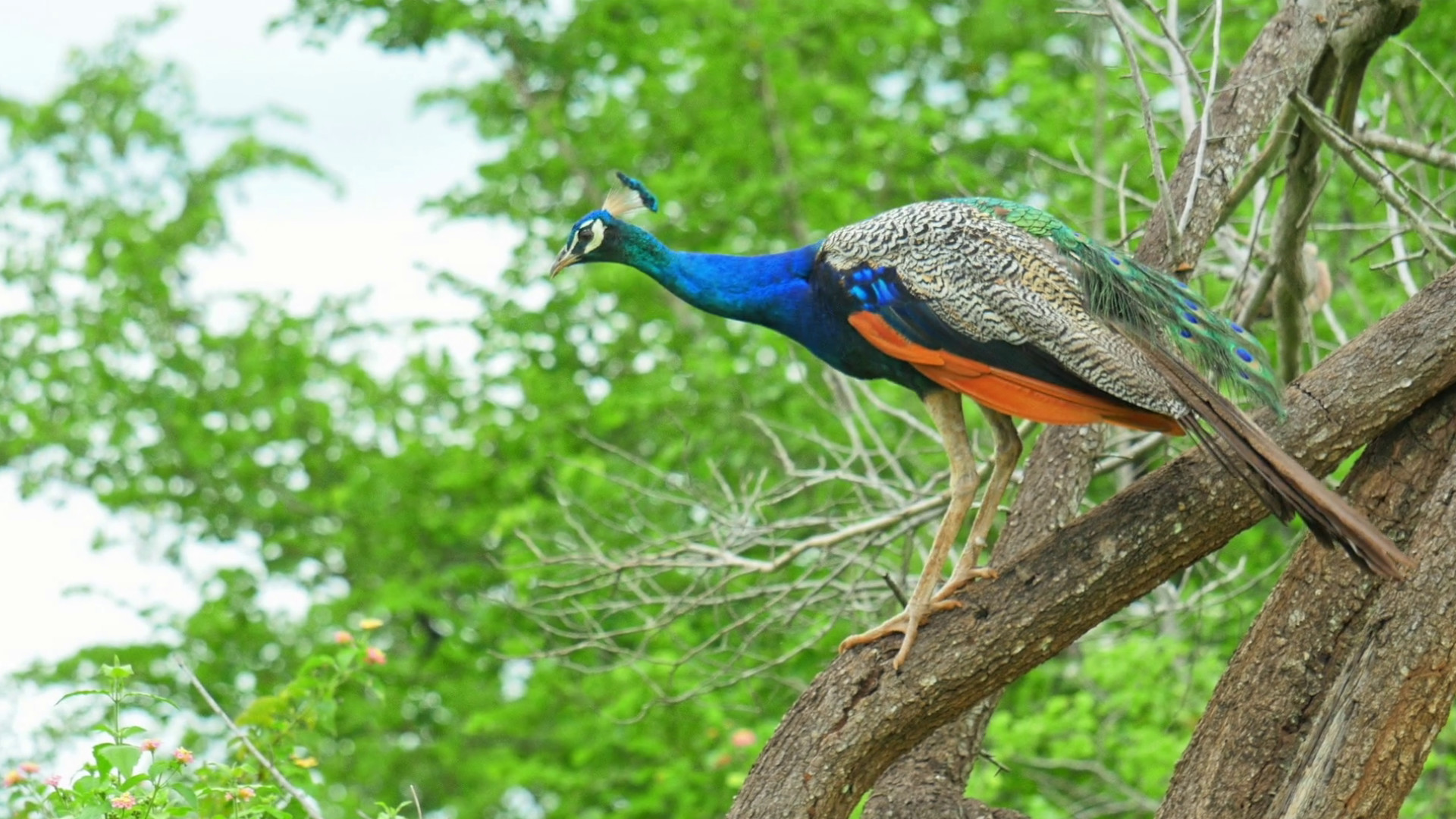
Yala is a birding paradise. Highlights include peacocks displaying their plumes, painted storks wading through shallows, crested hawk-eagles soaring overhead, and kingfishers darting between branches. Bring binoculars—the birdlife is phenomenal.
Timing is everything when it comes to wildlife safaris. Here's when to visit Yala for the best experience:
Peak months: March, April, May, June. This is prime safari season. Water sources dry up, forcing animals to congregate around remaining lagoons, making wildlife spotting easier. Vegetation thins out, improving visibility. Leopards are more active and visible as they hunt near waterholes.
Trade-off: Crowds. Block 1 gets packed with jeeps during peak season—think 30-40 vehicles jockeying for position around a single leopard. If you hate crowds, consider Blocks 2-5 or visit in February or July when numbers drop.
Weather: Hot and dusty. Bring sunscreen, sunglasses, and a scarf to cover your mouth—jeeps kick up dust on dirt tracks.
The park reopens in October after the September closure. Rains bring lush greenery, which is beautiful but makes wildlife harder to spot. Animals disperse across the park since water is abundant everywhere.
Pros: Fewer jeeps, lower prices, stunning landscapes, migrant bird species arrive.
Cons: Lower leopard sighting rates (30-40%), muddy tracks, potential safari cancellations during heavy rain.
Yala closes every September to let wildlife access water sources without human disturbance and for maintenance. Block 1 usually closes fully; some years Blocks 2-5 remain partially open. Check official sources before booking September trips.
Morning safari (5:30 AM - 10:30 AM): Best for wildlife sightings. Animals are active during cooler hours. Leopards hunt at dawn. Light is perfect for photography. Book this if you can only do one safari.
Afternoon safari (2:00 PM - 6:30 PM): Still excellent, especially in dry season. Late afternoon light is gorgeous. Fewer jeeps than mornings. Animals emerge as temperatures drop toward sunset.
Pro tip: Do both morning and afternoon safaris on consecutive days to maximize leopard chances. Each safari covers different routes, and wildlife moves around.
Here's what you'll pay for a Yala safari in 2026, broken down by component:
| Item | Cost (LKR) | Cost (USD) | Notes |
|---|---|---|---|
| Park Entrance (Foreign Adults) | 7,000 | 22 | Per person, per entry |
| Park Entrance (Foreign Children) | 3,500 | 11 | Ages 6-12 |
| Jeep Hire (Half-Day) | 10,000-15,000 | 32-48 | Per jeep (max 6 people) |
| Tracker/Guide Service | 2,000-3,000 | 6-10 | Often included in package |
| Service Charge | 1,000-2,000 | 3-6 | 10% typical |
| Shared Safari (Per Person) | 22,000-35,000 | 70-110 | All-inclusive half-day |
| Private Safari (Whole Jeep) | 55,000-80,000 | 175-250 | All-inclusive half-day |
| Full-Day Safari | 75,000-120,000 | 240-380 | 6:00 AM - 6:00 PM, lunch break outside park |
Where to book:
• Hotels in Tissamaharama: Most guesthouses and hotels arrange safaris. Convenient but slightly pricier (10-15% markup). Budget hotels like Lake View offer competitive rates.
• Tour operators in Tissa: Walk along Debarawewa Lake Road and you'll find dozens of operators. Compare prices—some offer shared tours at LKR 20,000 (USD 65) per person.
• Online booking platforms: GetYourGuide, Viator, and local sites like Safari Sri Lanka. Book in advance for dry season (March-June). Wet season has availability.
• Direct with jeep drivers: Negotiate directly near park gates. Only do this if you speak Sinhala or have local knowledge—scams exist.
Budget tip: Split a private jeep with other travelers. Hostels in Tissamaharama or nearby often have noticeboards for finding safari buddies. A private jeep split six ways costs LKR 10,000-13,000 (USD 32-42) per person plus entrance fees.
Block 1 is where 90% of tourists go. It has the highest leopard density, best infrastructure, and iconic spots like Patanangala Beach (a rocky outcrop where leopards often rest). The downside? During peak season, you'll share that leopard sighting with 30 other jeeps, engines idling, tourists snapping photos in a chaotic scrum.
Best for: First-time safari-goers, photographers wanting guaranteed action, anyone prioritizing leopard chances over solitude.
These blocks see far fewer jeeps. Wildlife is present—elephants, crocodiles, birds—but leopard density drops. Block 2 (adjacent to Block 1) occasionally delivers leopard sightings with minimal crowds. Blocks 3-5 are remote and require full-day safaris.
Best for: Repeat visitors who've done Block 1, those seeking wilderness solitude, serious birders.
The classic choice. Gates open at 5:30 AM sharp—arrive early to beat the rush. You'll watch sunrise over lagoons, spot elephants bathing, and hopefully catch a leopard before it retreats to shade. Morning safaris feel fresher, cooler, and more energetic.
Slightly fewer jeeps. Animals emerge as heat subsides. Golden-hour photography is spectacular. You might see leopards hunting or elephants heading to water as sunset approaches. Just as rewarding as mornings if you can tolerate midday heat.
Yala safaris are dusty, hot, and bumpy. Pack smart:
• Camera with telephoto lens: 200-400mm minimum. Leopards are rarely close. Bring extra batteries—you'll shoot hundreds of photos.
• Binoculars: Essential for spotting distant wildlife and birds. Don't rely on your guide's pair.
• Sun protection: Sunscreen (SPF 50+), sunglasses, wide-brimmed hat. Jeeps are open-sided—you'll be exposed for 4-5 hours.
• Dust mask or scarf: Dirt roads get dusty, especially during dry season. Cover your mouth when jeeps speed past.
• Water and snacks: Bring 1-2 liters of water per person. Some tours provide bottles, but confirm. Energy bars or fruit keep you fueled.
• Light layers: Early mornings are chilly (15-18°C); by 9 AM it's hot (30°C+). Wear neutral colors (khaki, olive, beige)—bright colors spook animals.
• Insect repellent: Mosquitoes are active near lagoons, especially during wet season.
Stay in the jeep. Never exit unless your guide explicitly says it's safe (e.g., at designated bathroom stops). Leopards, elephants, and sloth bears are dangerous. Guides have been charged by elephants protecting calves—respect their instructions.
No loud noises. Shouting, playing music, or slamming doors scares wildlife. Whisper when spotting animals. Let your guide communicate via radio with other jeeps.
Patience is key. Safaris involve long stretches of driving without sightings, then sudden bursts of action. Leopards hide in trees or behind rocks. Your tracker's trained eye will spot what you miss—trust them.
Listen to your guide. Experienced guides read animal behavior—when an elephant flaps its ears or a leopard shifts position. They know the best spots and have insider knowledge. Tip generously if they deliver a great safari (LKR 1,000-2,000 or USD 3-6).
Multiple safaris increase chances. One safari is a gamble. Two or three dramatically improve odds. Some travelers do morning and afternoon safaris on the same day, resting at their hotel mid-day.
Ethical photography. Don't ask drivers to get too close or block animals' paths. Jeep traffic can stress wildlife, especially mothers with young. Keep a respectful distance.
"Tissa" is the main hub for Yala safaris, located 15 km from the park entrance. It's a small town with guesthouses lining Debarawewa Lake.
• Budget: Basic guesthouses like Green Grass Cabanas or Lakshmi's Guest House (LKR 3,000-5,000 / USD 10-16 per night). Simple rooms, fan-cooled, friendly hosts who arrange safaris.
• Mid-range: Lake View Hotel or Tamarind Lake Hotel (LKR 8,000-15,000 / USD 25-48). AC rooms, pools, on-site restaurants.
• Luxury in Tissa: Kassapa Lions Rock or Ekho Safari Tissa (LKR 20,000-35,000 / USD 65-110). Upscale rooms, pools, spa, safari packages included.
For the ultimate experience, stay inside or on the edge of Yala:
• Cinnamon Wild Yala: (USD 350-500 per night) Luxury tented chalets on the beach edge of Block 1. All-inclusive packages with multiple game drives, naturalist guides, gourmet meals.
• Jetwing Yala: (USD 300-450 per night) Stylish eco-lodge with infinity pool, spa, and expert trackers. Perfect for honeymooners or wildlife photographers.
• Wild Coast Tented Lodge: (USD 800+ per night) Ultra-luxury "cocoon" tents with private plunge pools. Insanely expensive but unforgettable if budget allows.
Camping isn't allowed inside Yala for safety reasons. However, some operators run "camping safaris" at private campsites near Block 5, combining game drives with overnight tents. These cost LKR 40,000-60,000 (USD 130-190) per person for 2D/1N packages.
• Bus: Direct buses from Colombo's Maharagama or Pettah stations to Tissamaharama (6-7 hours, LKR 800-1,200 / USD 2.50-4). Buses are frequent but crowded and hot.
• Private car/van: Most comfortable option. Hotels arrange private transfers (LKR 18,000-25,000 / USD 60-80). Split costs with other travelers to save.
• Train + bus combo: Take the train to Matara (scenic southern route), then bus to Tissa (2 hours, LKR 300-500). Slower but more comfortable than direct bus.
Tissa is a 2-3 hour drive from Mirissa, Weligama, or Tangalle. Most travelers combine beach time with a Yala safari.
• Bus: Catch a bus from Matara to Tissa (LKR 300-500 / USD 1-1.50). Buses run every 30 minutes.
• Tuk-tuk: Expensive for the full distance (LKR 10,000+ / USD 32+). Only practical for short hops like Tangalle to Tissa.
The classic hill country-to-safari route. Ella to Tissa takes 3-4 hours by bus (change at Wellawaya). Alternatively, arrange a direct private car (LKR 12,000-18,000 / USD 40-60). Many travelers do Ella → Yala → South Coast beaches as a circuit.
Combined Ella + Yala day tour with instant confirmation on Klook.
The best time to see leopards in Yala is during the dry season from February to July, particularly March to June. Early morning safaris (5:30 AM) offer the highest chances as leopards are most active during cooler hours. However, sightings are never guaranteed—Yala has the world's highest leopard density, but these cats are masters of camouflage. Multiple safaris significantly increase your chances.
As of 2026, a Yala safari costs LKR 22,000-35,000 (USD 70-110) for a shared jeep half-day tour (per person), and LKR 55,000-80,000 (USD 175-250) for a private jeep. This includes entrance fees (LKR 7,000 for foreigners), jeep hire, and driver/tracker. Full-day safaris cost 40-50% more. Budget travelers can find cheaper shared tours from Tissamaharama.
Yes, Yala is absolutely worth it for wildlife enthusiasts. It boasts the world's highest density of leopards, plus elephants, sloth bears, crocodiles, and over 200 bird species. The landscapes—scrub jungles, lagoons, and dramatic rock formations—are stunning. Just set realistic expectations: wildlife sightings depend on luck, patience, and timing. Even without a leopard, Yala offers incredible biodiversity.
Yala National Park closes annually during September for drought management and to allow wildlife to access water sources without disturbance. Some years the closure extends to early October. Block 1 (the most popular zone) typically closes first, while Blocks 2-5 may remain partially open. Always check current closure dates when planning your visit.
Yes, but options are limited and expensive. A few luxury safari lodges operate inside or on the borders of Yala, offering all-inclusive packages (USD 300-800+ per night). These include multiple game drives, meals, and expert naturalist guides. Most travelers stay in Tissamaharama (15 km away) where budget guesthouses start at LKR 3,000 (USD 10) per night.
No, leopard sightings are never guaranteed. While Yala has the highest leopard density in the world (1 leopard per square kilometer in Block 1), these are wild, elusive animals. Sightings depend on season, time of day, weather, and pure luck. Statistics show roughly 60-70% of visitors spot a leopard during dry season morning safaris, but some see none despite multiple attempts. Book 2-3 safaris to maximize chances.
Yala National Park delivers one of Asia's most thrilling wildlife experiences. Even if you don't see a leopard (and honestly, that's part of the adventure), the park's biodiversity, dramatic landscapes, and raw wilderness make every safari worthwhile. Go in with realistic expectations, book multiple game drives if possible, and embrace the unpredictability of nature.
Whether you spot a leopard lounging on a rock at sunrise or watch elephant families bathing in lagoons at sunset, Yala will remind you why Sri Lanka is one of the world's greatest wildlife destinations. Pack your camera, bring patience, and get ready for an unforgettable safari.
For more Sri Lanka travel guides, check out our complete coverage of top destinations across the island. Planning your route? Our transportation guide covers buses, trains, and private options to help you navigate like a pro.