Step off the train in Nuwara Eliya and you'll instantly reach for your jacket — something you haven't needed anywhere else in tropical Sri Lanka. At 1,868 meters above sea level, this misty hill station feels like you've stumbled into the English countryside, complete with Tudor-style buildings, manicured gardens, and a golf course that's been around since 1889.
Known affectionately as "Little England," Nuwara Eliya is where British colonists escaped the coastal heat, and today it's where travelers come to experience a completely different side of Sri Lanka. Rolling emerald tea plantations blanket the hills, waterfalls cascade down mountain slopes, and the air stays refreshingly cool at 16-20°C year-round.
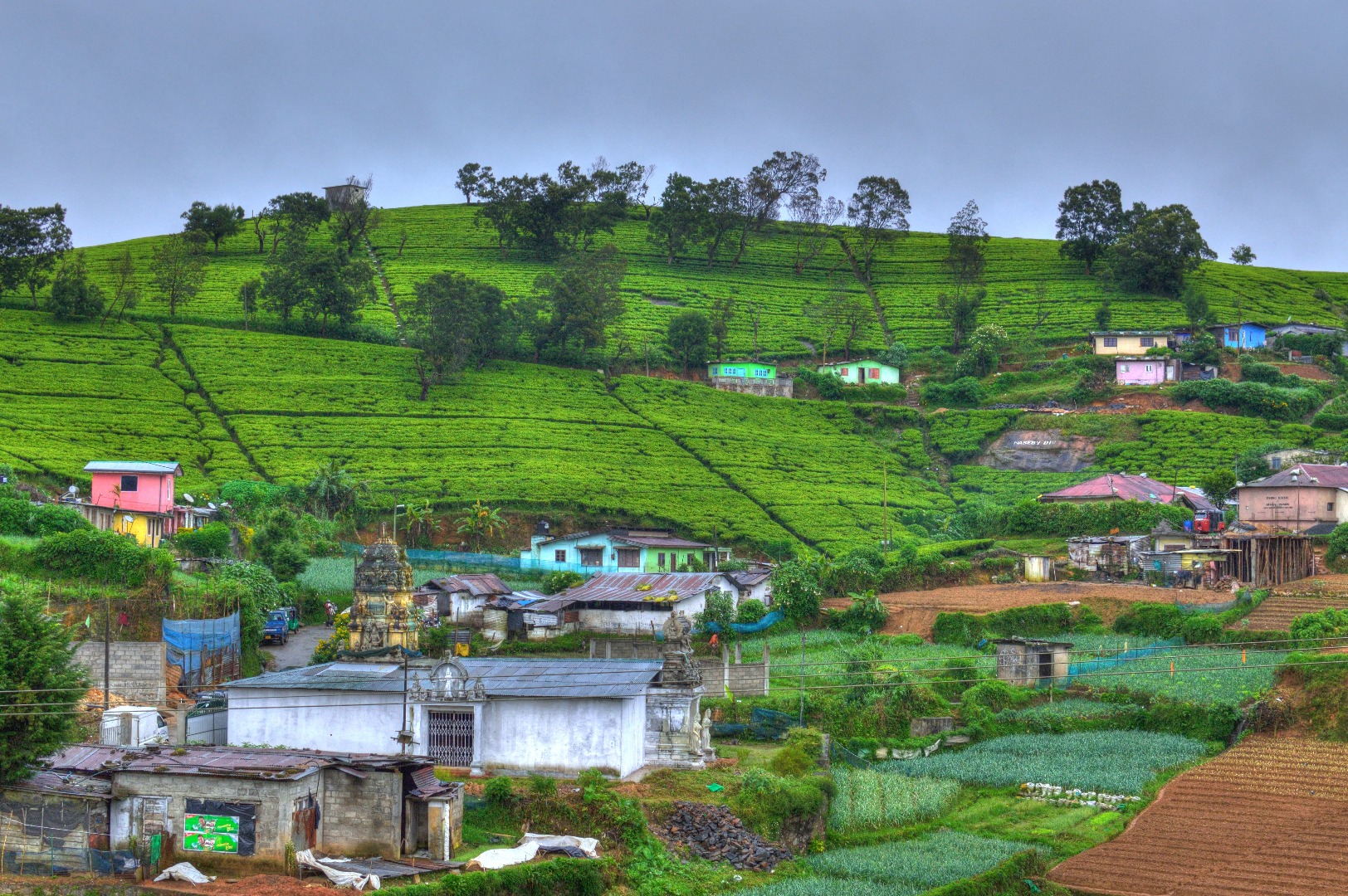
This is tea country — you're surrounded by some of the world's finest Ceylon tea estates. You'll watch tea pluckers work the hillsides, tour colonial-era factories, and sip fresh brews while overlooking valleys that stretch to the horizon. Whether you're here for the tea, the hikes, or just to wear a sweater in Sri Lanka, Nuwara Eliya delivers an unforgettable hill country experience.
Escape the tropical heat. While the coast swelters at 30°C+, Nuwara Eliya stays pleasantly cool at 16-20°C. You'll actually need long sleeves and a jacket, especially in the mornings and evenings when temperatures can dip to 10-12°C. It's the only place in Sri Lanka where locals wear winter coats.
Experience world-class tea country. Nuwara Eliya is the heart of Sri Lanka's tea industry. You're surrounded by working tea estates where you can tour factories, watch the entire production process from leaf to cup, meet tea pluckers, and taste fresh Ceylon tea with panoramic valley views. Tea lovers call this paradise.
British colonial charm frozen in time. The colonial architecture here is remarkable — Tudor-style hotels, a red-brick post office, English country gardens, and the exclusive Hill Club where members still dress for dinner. Walking through town feels like stepping back to 1920s British Ceylon.
World-class hiking and natural beauty. Just 23km away, Horton Plains National Park features World's End — a sheer 870-meter cliff drop with views that stretch to the southern coast. You'll also find waterfalls, botanical gardens, Sri Lanka's highest peak (Pidurutalagala), and some of the country's most photogenic landscapes.
This is what you came for. The tea estates around Nuwara Eliya produce some of the world's finest high-grown Ceylon tea, and many welcome visitors for factory tours and tastings.
Pedro Tea Estate offers excellent guided tours (LKR 500) where you'll see the entire process: withering, rolling, fermenting, drying, and grading. Guides explain the difference between BOPF, OP, and Pekoe grades. The tour ends with a tasting session overlooking the tea-covered valleys.
Mackwoods Labookellie is the most famous and touristy option, but for good reason — the views are spectacular, the restaurant serves excellent tea and chocolate cake, and the factory tour is comprehensive. It can get crowded, but the setting is unbeatable.
Damro Labookellie Tea Factory is less touristy and offers a more authentic experience. You'll see real workers processing tea, not a show for tourists. Blue Field Tea Factory is similar — a working factory where you can observe the genuine production process up close.
Most factory tours cost LKR 500-1,000 and last 30-45 minutes. Go in the morning when the factories are most active. Don't skip the tasting — fresh Ceylon tea sipped while overlooking misty tea plantations is a moment you won't forget.
Right in town, Gregory Lake is Nuwara Eliya's scenic centerpiece. This reservoir is surrounded by walking trails and offers swan boat rentals (LKR 500 for 30 minutes) and paddleboats. It's especially beautiful in the early morning when mist rises off the water and the surrounding hills glow in soft light.
The lakeside has a park area perfect for picnics, and you'll see locals and tourists relaxing by the water. Weekends get crowded with Sri Lankan families. The walk around the lake takes about 45 minutes and offers great photo opportunities with the colonial-era buildings reflected in the water.
This is the must-do day trip from Nuwara Eliya. Located 23km away, Horton Plains National Park protects a stunning highland plateau at 2,100+ meters elevation. The main attraction is World's End — a sheer cliff that drops 870 meters straight down, with views stretching all the way to the southern coast on clear days.
The standard route is a 9km loop trail through grasslands, cloud forests, and past Baker's Falls. Start early (by 6:00 AM) before clouds roll in and obscure the views — by 9:00-10:00 AM, World's End is often completely fogged in. The entrance fee is LKR 5,500 for foreigners, and you'll need your own transport (taxi round trip LKR 4,000-5,000).
The hike is moderate difficulty and takes 3-4 hours. Bring warm layers — it's cold at dawn up there. Many travelers cite World's End as one of their top experiences in Sri Lanka. For more hiking options, check out our top 10 things to do in Sri Lanka.
This well-maintained colonial-era park in the heart of town is a peaceful escape. The manicured lawns, exotic trees, and flower beds showcase classic English garden design. The real draw is the cherry blossoms that bloom in February-March, turning the park pink and attracting photographers and picnickers.
Entrance is LKR 300 for foreigners. It's a nice spot to relax for an hour, especially if you're tired from hiking. Birdwatchers will spot several highland species here.
This colorful Hindu temple is associated with the Ramayana epic — legend says this is where Sita was held captive by King Ravana. The temple sits on the banks of a small stream and features vibrant statues depicting scenes from the Ramayana. It's a short visit (20-30 minutes) but culturally significant and free to enter (small donations appreciated).
Located 10km from Nuwara Eliya, Hakgala is one of Sri Lanka's finest botanical gardens. Established in 1861, the gardens showcase temperate and subtropical plants including roses, orchids, medicinal herbs, and ferns. The rose garden is particularly impressive, with hundreds of varieties blooming year-round.
Entrance is LKR 3,000 for foreigners. The gardens sit at the base of Hakgala Rock, and the combination of manicured gardens against wild mountain scenery is beautiful. Budget 1-2 hours to explore properly. A tuk-tuk from town costs around LKR 800-1,000 each way.
About 30km from Nuwara Eliya, Ambewela is Sri Lanka's largest dairy farm and looks like it was airlifted from New Zealand. Rolling green pastures, grazing cows, and mountain backdrops create scenes that don't look like Sri Lanka at all.
You can't tour the farm itself, but the drive through the area via Pattipola is stunning. Many combine this with a trip to Horton Plains since it's on the way. The scenery is the attraction here — perfect for photos and a picnic stop.
Established in 1889, this is Sri Lanka's oldest golf club and one of the oldest in Asia. The 18-hole course maintains its colonial character with classic clubhouse architecture and well-kept greens set against mountain scenery. Green fees for visitors are around LKR 8,000-10,000, and you can rent equipment. Even non-golfers appreciate the historic atmosphere.
These two impressive waterfalls are visible from the main road between Nuwara Eliya and Hatton/Talawakele. St. Clair's Falls is known as "Little Niagara" — a wide curtain of water dropping 80 meters over a cliff face. Devon Falls is nearby, plunging 97 meters through tea plantations.
Both can be viewed from roadside viewpoints for free, or you can hike down for closer views (steep climbs back up). Best after rainfall when the flow is strongest. If you're taking the train between Kandy and Nuwara Eliya, you'll pass these waterfalls.
The train journey from Nuwara Eliya (Nanu Oya station) to Ella is considered one of the most beautiful train rides in the world. You'll pass through emerald tea plantations, over the famous Nine Arch Bridge, through mountain tunnels, and past cascading waterfalls for 3 hours.
The journey costs LKR 180-350 depending on class. Book a few days ahead or arrive early for unreserved 2nd/3rd class. Many travelers hang out the open train doors for photos (be careful). The landscape gets progressively more dramatic as you approach Ella. This is hands-down one of Sri Lanka's best experiences — read our full guide to Ella for what to do when you arrive.
At 2,524 meters, Pidurutalagala is Sri Lanka's highest peak. The summit is restricted (military and communication installations), but you can hike partway up through pine forests and tea estates. The trailhead starts about 5km from town. It's a steep climb, so bring water and warm layers. Views from higher elevations are excellent on clear days.
Spend an hour or two walking around town to appreciate the colonial buildings. The red-brick post office looks straight out of Victorian England, the Grand Hotel has maintained its 1891 grandeur, and the Hill Club (members only, but you can peek inside if staying as a guest) preserves British club culture down to the jacket-and-tie dress code for dinner. The Queen's Cottage, old racecourse, and Anglican church round out the colonial tour.
Nuwara Eliya's tea plantations are the main draw, so here's what to expect and how to choose:
What You'll See on a Tea Factory Tour: Most tours follow the same structure. First, you'll walk through the tea plantation itself and watch tea pluckers at work (they can harvest 15-20kg per day). Then you'll enter the factory to see the production process: withering (drying fresh leaves), rolling (breaking cell walls), fermenting (oxidation), drying (stopping fermentation), and sorting/grading.
Guides explain the grading system — BOPF (Broken Orange Pekoe Fannings) is the finest dust, OP (Orange Pekoe) is full-leaf tea, and Pekoe refers to specific leaf positions. You'll learn that higher-elevation tea (like Nuwara Eliya) produces more delicate, complex flavors than low-grown tea.
The tour ends with a tasting session where you'll sample different grades. Most factories have shops selling their tea at good prices — stock up here for gifts.
Pedro Tea Estate: Great for first-time visitors. The guided tour (LKR 500) is informative and the guides speak good English. The tasting room overlooks tea-covered hills. Not too crowded, and the factory is actively producing so you see real operations.
Mackwoods Labookellie: The most popular option. Excellent restaurant with tea, coffee, and their famous chocolate cake. The setting is stunning — you'll take dozens of photos. The downside: it's very touristy, sometimes with bus groups. If you can visit on a weekday morning, it's much better.
Damro Labookellie Tea Factory: A more authentic, less touristy experience. You'll see the real production process without as much performance for tourists. Good if you want to avoid crowds and see how tea is actually made on a working estate.
Blue Field Tea Factory: Similar to Damro — a genuine working factory where you can observe the full process. Smaller scale, fewer tourists, and staff are happy to answer questions in detail.
Pro tip: Visit 2-3 factories if you have time. Each has slightly different approaches, views, and specialties. Go early in the day (9:00-11:00 AM) when factories are most active and before afternoon clouds roll in.
Nuwara Eliya's accommodation options range from budget guesthouses to grand colonial hotels. Here's what to expect at different price points (prices for 2026):
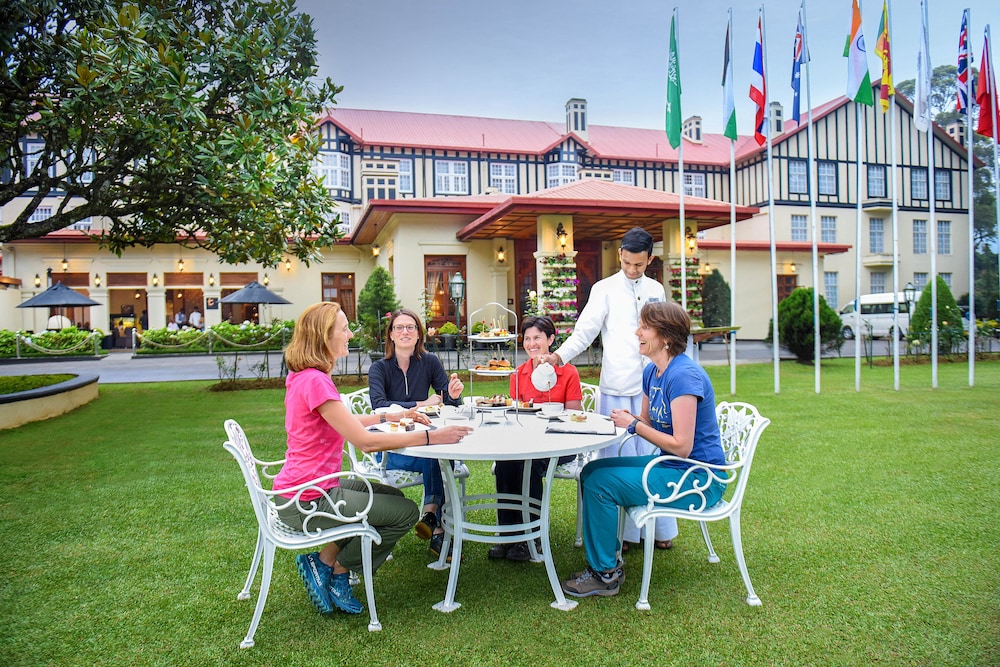
Grand Hotel (LKR 25,000+) — The colonial icon. Built in 1891 as a British governor's residence, this hotel oozes old-world charm with wood-paneled rooms, four-poster beds, fireplaces, and formal gardens. The restaurant serves proper English breakfast and high tea. You're paying for the atmosphere and history here.
Jetwing St. Andrew's (LKR 30,000+) — More modern luxury with colonial touches. Spacious rooms, excellent service, heated indoor pool (you'll appreciate it), and a prime location overlooking the golf course. The restaurants are among the best in town.
The Hill Club (LKR 20,000+) — The most exclusive option, technically a members' club that accepts overnight guests. You'll dress for dinner (jacket required for men), dine in the formal dining room, and experience British club culture frozen in time. It's not for everyone, but the experience is unique in Sri Lanka.
Araliya Red (LKR 18,000+) — Modern hotel with colonial design elements. Comfortable rooms, good views, hot water (essential in Nuwara Eliya), and solid restaurant. Less character than the Grand Hotel but more modern amenities.
Galway Heights (LKR 12,000+) — Excellent mid-ranger with views over town and Gregory Lake. Clean rooms, friendly staff, good restaurant, and a cozy fireplace lounge. Great value for the price.
Blackpool Hotel (LKR 10,000+) — A Nuwara Eliya institution. The building has colonial character, rooms are simple but comfortable, and the location is central. Not fancy, but reliable and fairly priced.
Single Tree Hotel (LKR 6,000+) — One of the better budget options. Clean rooms, hot water, helpful staff, and decent breakfast included. Nothing fancy, but everything works and it's good value.
Alpine Hotel (LKR 4,500+) — Basic but acceptable budget choice. Rooms are small and simple, but clean with hot water (critical in Nuwara Eliya's cool climate). Location is convenient and staff are friendly.
Budget tip: Nuwara Eliya is one of the few places in Sri Lanka where splurging on a colonial hotel is worth it — the atmospheric charm adds so much to the experience. But if you're budget-conscious, the mid-range options still deliver comfort and hot water. For more on managing costs, see our Sri Lanka travel budget guide.
Grand Hotel and The Golden Ridge — iconic colonial stays bookable via Klook.

All-inclusive Nuwara Eliya day tour from Kandy with instant confirmation.
Nuwara Eliya's weather is completely different from the rest of Sri Lanka — cool year-round and often misty. Here's what to expect:
Temperature: 16-20°C (60-68°F) during the day, dropping to 10-12°C (50-54°F) at night. Mornings can be quite cold, especially in December-February. You'll need a jacket, sweater, long pants, and possibly a light coat — clothing you won't need anywhere else in tropical Sri Lanka.
Best time to visit: December to March is ideal. This is the dry season with clear skies, bright sunshine (though still cool), and flowers in bloom. February-March is special because cherry blossoms bloom in Victoria Park, turning the gardens pink. Visibility for Horton Plains/World's End is best during these months.
April: The "Nuwara Eliya Season" when Sri Lankans flock here for the Sinhala/Tamil New Year holidays, horse racing events, and flower shows. Hotels fill up and prices spike. The atmosphere is festive but crowded — book well ahead if visiting in April.
Avoid: May to September brings the southwest monsoon with heavy rain, thick fog, and poor visibility. Horton Plains is often completely fogged in, tea plantation views are obscured, and hiking becomes muddy and slippery. It's not impossible to visit, but you'll miss the best scenery.
What to pack: Regardless of when you visit, bring warm clothes. Jacket or fleece, long pants, closed-toe shoes, rain jacket, and layers you can add/remove. If you're visiting in December-February, a light coat is not excessive. The cool weather is refreshing after hot coastal areas, but you need to be prepared.
For comprehensive weather information across Sri Lanka, check our Sri Lanka weather guide.
Nuwara Eliya's food scene reflects its colonial heritage — you'll find English breakfasts, high tea with scones, and international menus alongside Sri Lankan fare.
Colonial hotel dining: The Grand Hotel, Hill Club, and Jetwing St. Andrew's serve excellent English breakfasts (eggs, bacon, sausages, toast, porridge) and traditional high tea (tea, scones with jam and cream, finger sandwiches, pastries). Even if you're not staying there, you can often book high tea as a non-guest. Expect LKR 2,000-3,500 per person.
Local restaurants in town:
Tea factory restaurants: Mackwoods Labookellie has the best restaurant setting among the tea factories — sit on the terrace overlooking endless tea plantations while sipping fresh tea and eating chocolate cake (LKR 500-800). The atmosphere is worth the tourist crowds.
Local specialty: Fresh strawberries with cream. The cool climate is perfect for strawberries, and you'll see vendors selling them around town and at Gregory Lake. Some cafes serve strawberry desserts. They're sweet, fresh, and uniquely associated with Nuwara Eliya.
Dining tip: Make dinner reservations at colonial hotels, especially during peak season (December-March) and weekends. Most restaurants in town don't require bookings. Bring cash — many smaller restaurants don't accept cards.
Nuwara Eliya is in Sri Lanka's central highlands, accessible by train, bus, or private transport. The journey is part of the experience — you'll pass through stunning tea country and mountain scenery.
The train from Kandy to Nanu Oya (Nuwara Eliya's station) takes about 3 hours and costs LKR 180-350 depending on class. The journey climbs through tea plantations, past waterfalls, and through mountain tunnels — it's incredibly scenic.
Nanu Oya station is 8km from Nuwara Eliya town. You'll need a taxi (LKR 800-1,200) or tuk-tuk for the final leg uphill. Trains run several times daily. Book 1st class reserved seats a few days ahead, or arrive early for unreserved 2nd/3rd class.
If you're coming from Ella, the train to Nanu Oya takes 3 hours and is one of the world's most scenic rail journeys. You'll pass over the Nine Arch Bridge, through tea estates, and past dramatic valley views. Same pricing and booking advice as Kandy route.
Direct buses run from Kandy to Nuwara Eliya (3.5 hours, LKR 200-300). Buses leave frequently throughout the day from Kandy's goods shed bus station. The ride is winding and can be slow, but it's the cheapest option. Buses drop you in the center of Nuwara Eliya town.
A private taxi from Colombo takes 5-6 hours and costs LKR 15,000-20,000. From Kandy, it's 2.5-3 hours and LKR 8,000-10,000. This is the most comfortable option and allows stops at viewpoints and waterfalls along the way. Many travelers hire a driver for their entire Sri Lanka trip — Nuwara Eliya fits easily into hill country itineraries.
For more details on Sri Lankan transport, see our complete transport guide.
Horton Plains & World's End: The top day trip, 23km away. Start at 6:00 AM to see World's End before clouds obscure views. Budget a full morning (taxi round trip + hiking, 4-5 hours total). Entrance LKR 5,500.
Ella: Take the scenic train (3 hours each way) for a day trip, though most travelers prefer to spend the night in Ella to enjoy the full experience. See Nine Arch Bridge, hike Little Adam's Peak, and soak in the backpacker atmosphere.
Hakgala Botanical Gardens: Only 10km away, perfect for a half-day trip. Roses, orchids, and mountain scenery. Combine with Seetha Amman Temple for a fuller morning.
Ambewela Farms: 30km away, this New Zealand-like dairy farm region offers stunning pastoral scenery. Not a formal attraction, but the drive is beautiful and worth a stop if you're heading to Horton Plains.
Adam's Peak: About 70km from Nuwara Eliya. If you're visiting during pilgrimage season (December-May), you can make a very early start from Nuwara Eliya to climb Sri Lanka's sacred mountain at sunrise, though most climbers prefer to stay closer to the trailhead.
Elevation: 1,868 meters (6,128 feet) above sea level. You might feel slightly breathless if you arrive from the coast — take it easy on your first day.
What to pack: This is critical — bring warm clothes! You need a jacket or fleece, long pants, closed-toe shoes, and possibly a light coat if visiting December-February. Rain jacket or umbrella. Layers you can add/remove as temperatures change throughout the day. This is the ONLY place in Sri Lanka where you'll need winter clothes.
Money: ATMs are available in the town center (Bank of Ceylon, Commercial Bank, People's Bank). Withdraw cash here before heading to Horton Plains or rural areas. Colonial hotels and larger restaurants accept cards, but smaller shops and tuk-tuks are cash-only.
Town center atmosphere: Weekends get crowded with Sri Lankan tourists, especially during holiday periods. Weekdays are quieter and more atmospheric. Gregory Lake is packed on Sundays with local families picnicking.
April crowds: The Nuwara Eliya Season in April brings horse racing, flower shows, and huge crowds of domestic tourists. Hotels are fully booked and expensive. If you want the festive atmosphere, book months ahead. If you prefer quiet, avoid April.
Safety: Nuwara Eliya is very safe. Standard precautions apply — watch your belongings in crowded areas, don't leave valuables in hotel rooms, be cautious with tuk-tuk prices (agree before starting). The cool weather means you're less likely to be exhausted and dehydrated like in hot areas.
Health: The high elevation can cause mild altitude effects for some people — headaches, breathlessness, fatigue. Drink plenty of water and take it easy on day one. The cool weather means mosquitoes are rare — dengue risk is much lower here than on the coast.
Absolutely! Nuwara Eliya offers a completely different Sri Lanka experience — cool mountain climate (16-20°C), misty tea plantations, colonial British architecture, and stunning waterfalls. It's the perfect escape from the tropical heat and one of the most scenic regions in Sri Lanka. The nearby Horton Plains and World's End are must-see natural wonders.
2-3 days is ideal for Nuwara Eliya. Day 1: Arrive, visit tea factory, explore Gregory Lake and town. Day 2: Early morning trip to Horton Plains/World's End, afternoon at Hakgala Gardens. Day 3: Victoria Park, Seetha Amman Temple, or take the scenic train to Ella. Add an extra day if you want to hike Pidurutalagala or visit Ambewela Farms.
December to March is the best time to visit Nuwara Eliya — dry weather, clear mountain views, and flowers in bloom (cherry blossoms peak in February-March). April is crowded due to the Nuwara Eliya Season (horse racing, flower shows). Avoid May to September when the southwest monsoon brings heavy rain and fog that can obscure views.
Yes, by Sri Lankan standards! Temperatures range from 16-20°C (60-68°F) year-round, much cooler than the tropical coast. Mornings and evenings can drop to 10-12°C. You'll definitely need a jacket, sweater, and long pants — something you won't need anywhere else in Sri Lanka. Bring rain gear as well, especially during monsoon season.
Take the train from Kandy to Nanu Oya station (3 hours, LKR 180-350), then a taxi 8km to Nuwara Eliya town (LKR 800-1,200). Alternatively, direct buses run from Kandy (3.5 hours, LKR 200-300). Private taxis cost LKR 8,000-10,000. The train journey through tea country is stunning and highly recommended.
Mackwoods Labookellie is the most famous with excellent views and a restaurant. Pedro Tea Estate offers great guided tours with tastings for LKR 500. Damro Labookellie is less touristy with authentic factory experiences. Blue Field Tea Factory shows the full production process. Visit 2-3 factories if you have time — each offers unique perspectives on Ceylon tea production.
Nuwara Eliya is Sri Lanka at its most unexpected — cool mountain air instead of tropical heat, misty tea plantations instead of palm trees, Tudor architecture instead of Buddhist temples. It's the country's hill station escape, and that's exactly what makes it special.
Give yourself at least 2-3 days to properly experience the tea factories, hike Horton Plains, and soak in the colonial atmosphere. The train journey here (or onward to Ella) is one of Sri Lanka's highlights, and the tea plantation tours offer insights you won't find anywhere else in the world.
Pack that jacket, book your accommodation early if visiting during peak season (December-March), and prepare for a completely different side of Sri Lanka. After days of tropical heat, pulling on a sweater in the hill country feels absolutely perfect.
For more Sri Lanka travel inspiration and practical guides, explore our complete blog section.
Last updated: May 27, 2026